
Every trip is important.
Whether a passenger is traveling to work, a medical appointment, or a community event, they depend on transit services that are safe, reliable, and consistent. Delivering that experience doesn’t happen by chance. It requires a commitment to quality at every level of an operation, from the maintenance shop to the driver’s seat and everywhere in between.
At MTM Transit, quality is more than meeting performance standards. It’s an ongoing process of listening, learning, and improving to better serve our passengers, communities, and agency partners.
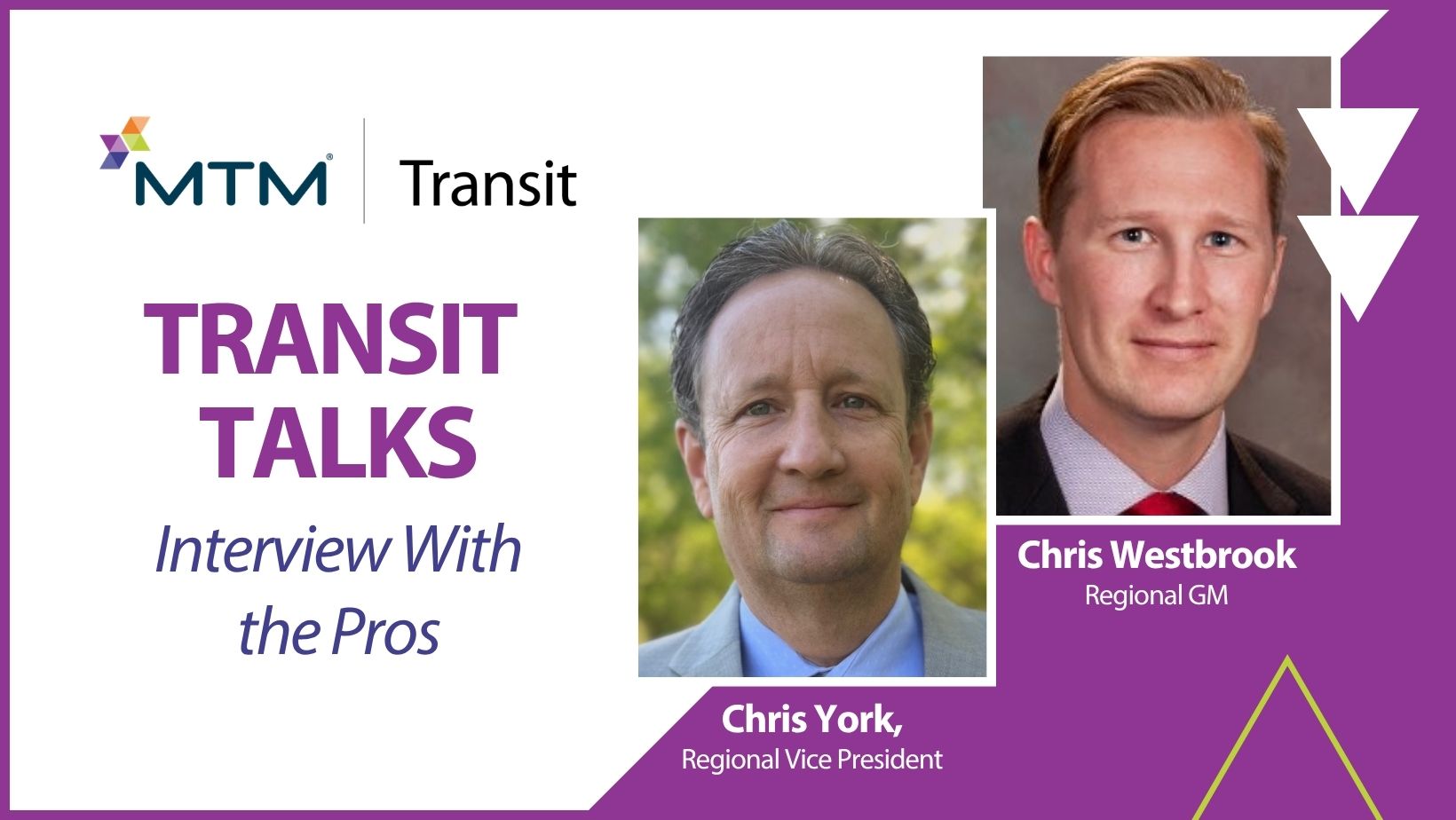
In this quarter’s Transit Talks, we sat down with Regional Vice President Chris York and Regional General Manager Chris Westbrook to discuss how MTM Transit uses quality assurance, data, passenger feedback, and strong local leadership to drive continuous improvement across our operations.
Building Quality into Everyday Operations
Safety is the foundation of every successful transit operation, but quality extends far beyond preventing incidents. According to Westbrook, quality is built into every aspect of service delivery, from vehicle maintenance and operational performance to the passenger experience itself.
“Proper vehicle maintenance is essential to ensuring our vehicles are safe to operate,” he explains. “But quality also means providing dependable service and creating positive passenger experiences that build trust and confidence in our system.”
Maintaining those standards across multiple locations requires more than policies and procedures. It requires leadership, communication, and accountability at every level of the organization.
To ensure consistency, local teams regularly review information from maintenance programs, service performance metrics, and passenger feedback. Looking at these sources together helps identify trends, address concerns early, and uncover opportunities for improvement.
“Local leaders drive the success of the operation through how well they communicate with their teams,” York says.
When leaders stay engaged and responsive, quality becomes part of the culture rather than simply a metric to track.
Listening to the People We Serve
Data can tell part of the story, but passengers experience service firsthand. Their feedback often provides valuable insights that may not immediately appear in operational reports or performance dashboards. Surveys, complaints, commendations, and field observations all help paint a more complete picture of service quality.
But collecting feedback is only the first step.
“Passenger feedback only matters if it changes how we run the operation,” York says. “We don’t just collect comments and complaints. We investigate them, look for patterns, and own the follow-up.”
One example came after the introduction of a new low-floor vehicle. While the vehicle offered accessibility benefits, the transition from lift-equipped vehicles to ramp-equipped vehicles resulted in an increase in customer concerns. Rather than treating each complaint as an isolated issue, the team took a deeper look at the underlying causes. They reviewed passenger loading and unloading procedures, vehicle positioning practices, and how operators were assisting passengers, particularly those with visual impairments.
The evaluation led to updated training and revised operating procedures that better prepared operators for the unique differences between ramp- and lift-equipped vehicles. For Westbrook, the experience demonstrated the value of gathering input directly from passengers and team members in the field.
“It was a great example of listening to passenger needs and observing challenges in the field,” he says.
Using Data to Drive Meaningful Improvement
When a trend or recurring issue emerges, the next question is often the most important: Why is it happening? Understanding the root cause is what transforms information into improvement.
Depending on the situation, the solution may involve additional training, operational adjustments, staffing changes, or strengthened accountability measures. The key is looking beyond symptoms to identify the underlying issue.
A recent maintenance initiative illustrates this approach in action. After identifying a key maintenance reliability metric that was not meeting expectations, the maintenance team implemented a process to re-inspect 20% of completed preventative maintenance inspections. The additional oversight helped identify inconsistencies, reinforce standards, and strengthen overall maintenance practices. Over time, performance steadily improved, ultimately meeting and exceeding the established goal.
For York, this type of continuous improvement mindset is essential to effective quality assurance.
“When QA findings show a recurring issue, we have to ask why it keeps happening, not just what went wrong,” he says.
Westbrook agrees that metrics are most valuable when they lead to action. By combining data with accountability, collaboration, and problem-solving, transit organizations can create lasting improvements that positively impact both operations and passengers.
Quality Is a Partnership
Quality doesn’t happen in isolation. Strong partnerships between MTM Transit and our clients play a critical role in maintaining high standards and identifying opportunities for growth. Open communication allows teams to review performance together, address concerns proactively, and align on shared goals and expectations.
Quarterly Business Reviews (QBRs) provide an important forum for those conversations. While key performance indicators remain an important part of the discussion, Westbrook believes the most meaningful outcomes often come from the conversations behind the numbers.
“These meetings should provide an opportunity to openly discuss both challenges and successes,” he says. “Those conversations help us identify opportunities for improvement, celebrate what’s working, and drive positive change together.”
By fostering transparency, trust, and collaboration, MTM Transit and our agency partners can work together to strengthen service quality and improve the passenger experience.
The Road Ahead
At MTM Transit, quality is never a finished project. Continuous improvement means identifying issues early, learning from feedback, and making adjustments before small challenges become larger trends. It requires leaders who take ownership, employees who remain committed to excellence, and teams that are willing to continuously evaluate how they can do better.
“When leaders take ownership, hold themselves and their teams accountable, and continuously look for opportunities to improve, we build a culture of excellence,” York says.
Technology will also play an important role in the future. Westbrook sees opportunities to bring together existing operational tools and performance data through an integrated operator dashboard, giving teams greater visibility into real-time performance and emerging trends.
“If in the future we can bring these tools together, we can move from simply reacting to issues to being more proactive in addressing them,” Westbrook says.
Ultimately, quality is about more than meeting benchmarks or achieving operational goals. It’s about listening to passengers, empowering employees, embracing accountability, and using insights to drive meaningful change.
Because quality isn’t just reflected in a scorecard. It’s reflected in every passenger experience, every successful trip, and every improvement that helps people safely and reliably reach their destination.
