
How MTM Transit Successfully Transformed Sun Shuttle Services in Pima County
Challenge
Through a formal RFP process, Pima County was seeking a partner capable of rebuilding workforce capacity, deploying a modern fleet, stabilizing inherited assets, opening two operating facilities, integrating new technology, and protecting service continuity on an accelerated schedule.
Solution
MTM Transit met this challenge head on, launching Americans with Disabilities Act (ADA) paratransit, dial-a-ride, and fixed-route service in October 2025 with the people, fleet, facilities, systems, and support structure ready to perform.
Results
Ridership responded immediately: monthly ADA paratransit trips rose from 7,743 to 11,055, and on-time performance climbed from 86.08% to 93.28% in the first month, strengthening reliable access across Pima County.
Under 60 Days
Implementation Timeframe
100+
Vehicle Operators Recruited and Onboarded
50+
New Vehicles Deployed

MTM Transit’s commitment to communication, problem solving and safety excellence has been consistent throughout the transition process. All levels of the MTM Transit team have demonstrated true commitment to teamwork and incredible resourcefulness to navigate the hurdles of a challenging vendor conversion.
Mary Carter, Director of Mobility Management Services
The Challenge: A High-Stakes Transition
The transition required MTM Transit to solve five priorities at once
- Build a workforce capable of supporting full service from the first day of operations.
- Procure and integrate more than 50 new vehicles while prioritizing inherited fleet repairs. The previous contractor had leveraged an outdated fleet, with vehicles transferred in from other regions.
- Secure and equip operating facilities in Tucson and Ajo.
- Implement dispatch, call center, maintenance, safety, training, IT, telephony, and utility infrastructure.
- Deploy new technology, including RideCo for ADA paratransit and dial-a-ride service and TripShot for fixed-route operations.

The Solution: Turnkey Mobilization From Day One
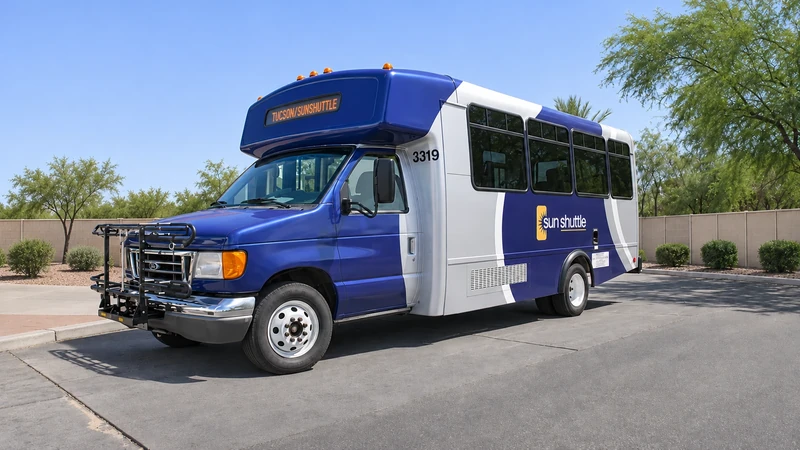
MTM Transit approached the launch as an enterprise-wide mobilization, not a local handoff. Operations led the transition while specialists from Recruiting, Human Resources, Safety, Training, Maintenance, Technology, Procurement, Legal, Accounting, and executive leadership worked from one integrated readiness plan. We deployed a modern, accessible fleet inclusive of 48 hybrid Toyota Sienna minivans, six Ram ProMasters, 33 client-owned paratransit cutaways and Freightliner buses, and eight support vehicles.
What MTM Transit Delivered in Under 60 Days

Workforce Readiness
More than 100 operators were recruited, trained, and onboarded, compared with 61 operators under the prior contractor.
Fleet Deployment

Operating Infrastructure
Technology Integration
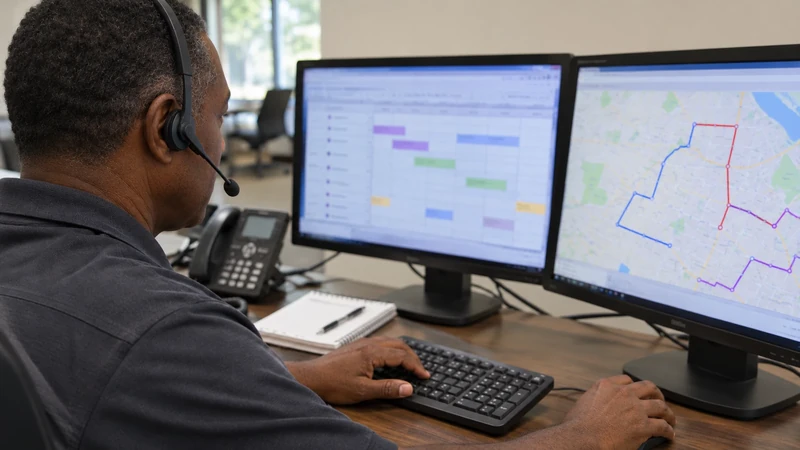
The RideCo platform was deployed for paratransit and dial-a-ride scheduling, and TripShot was implemented for fixed-route management.
The Results: Immediate Improvement and Lasting Momentum
Key performance highlights post-implementation include:
- Ridership responded immediately. Due to higher quality vehicles, increased driver availability, and reinforced service quality standards, riders had more confidence in the paratransit system. Monthly ADA paratransit trips increased from 7,743 to 11,055, while monthly ADA passengers rose from 8,718 to 12,357.
- On-time performance (OTP) improved. OTP rose from 86.08% to 93.28% in the first month, a gain of 7.2 percentage points during the integration of new vehicles, systems, facilities, and employees.
- Workforce capacity strengthened. The operation grew beyond 100 operators, supported by hands-on training, resources, and leadership.
This transformation has enhanced access and mobility for thousands in Pima County while establishing benchmarks for efficiency, collaboration, and quality. MTM Transit’s Pima County success exemplifies how innovation—like deploying an enhanced hybrid fleet that has driven significant ridership growth and integrating advanced tools like RideCo for dynamic paratransit scheduling and TripShot for fixed-route management—alongside teamwork and commitment, can rapidly overcome operational hurdles.
